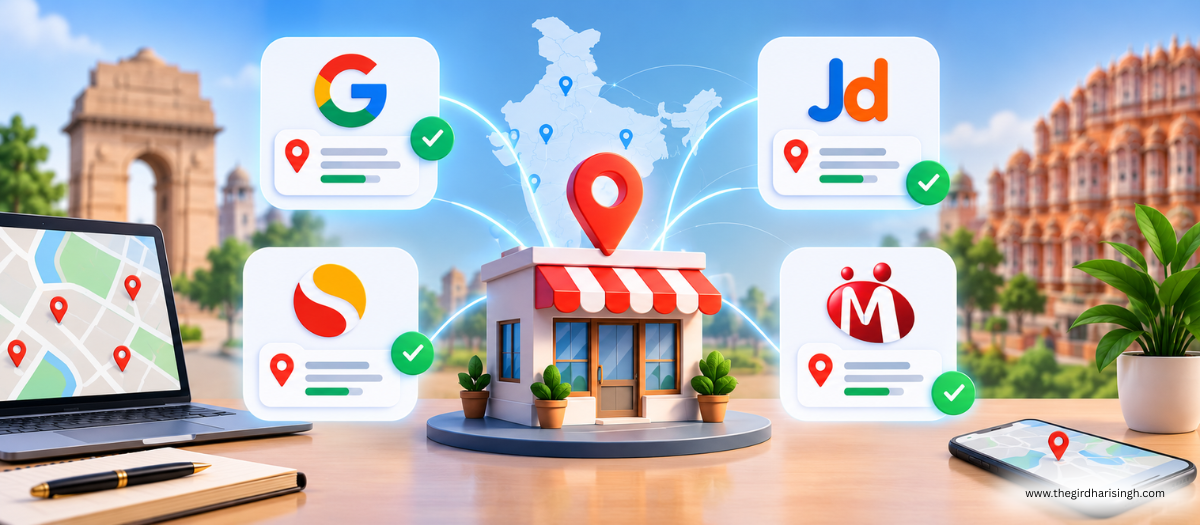
NAP consistency means your business name, address and phone number match on every listing that describes you: Google Business Profile, your website, Justdial, Sulekha and IndiaMART. In India, fix phone numbers first, then address details that change the location, then names. Most of the damage comes from old listings with dead numbers, not from “Shop 4” versus “Shop No. 04”.
What does NAP consistency actually mean for an Indian business?
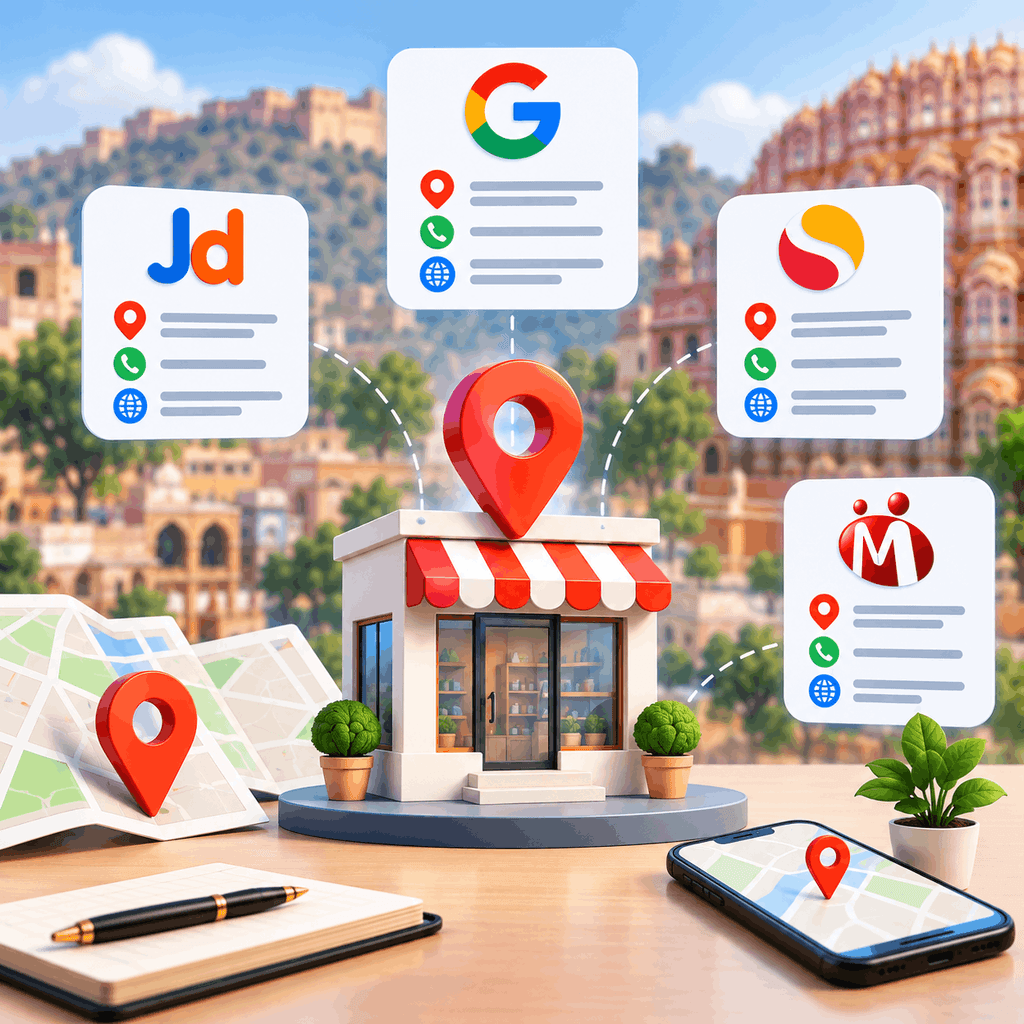
NAP stands for name, address, phone. Consistency means every place that lists your business agrees on those three facts.
Google doesn’t publish a “consistency score”. What it does say is that local results depend on relevance, distance and prominence, and that “businesses with complete and accurate info are more likely to show up in local search results” (Google Business Profile Help). Prominence draws on information from across the web, including links and reviews.
The Indian version of this problem looks nothing like the US guides. Three things cause almost all of it: shop-number formatting, landline versus mobile, and listings you never created yourself.
Does “Shop 4” vs “Shop No. 04, Ground Floor” hurt my local rankings?
This is where I disagree with most SEO checklists. In my experience, formatting differences on their own don’t hurt you.
“Shop 4, Orbit Mall, Civil Lines” and “Shop No. 04, Ground Floor, Orbit Mall, Civil Lines” point to the same building, pin code and map pin. Google’s own guidelines say floors, suite and building numbers “may also be included” in an address (Business Profile guidelines). That’s optional detail, not a mismatch.
What does hurt is anything that moves you on the map. A wrong pin code. A locality spelling that geocodes to a different area. An old address from before you shifted shops. “Vidhyadhar Nagar” versus “Vidyadhar Nagar” is noise. “Sector 3” versus “Sector 8” is a different place.
So I don’t bill clients to retype dozens of listings character by character. I write one canonical address, use it everywhere I’m editing anyway, and only chase the differences that change the location.
Should I list my landline or my mobile number?
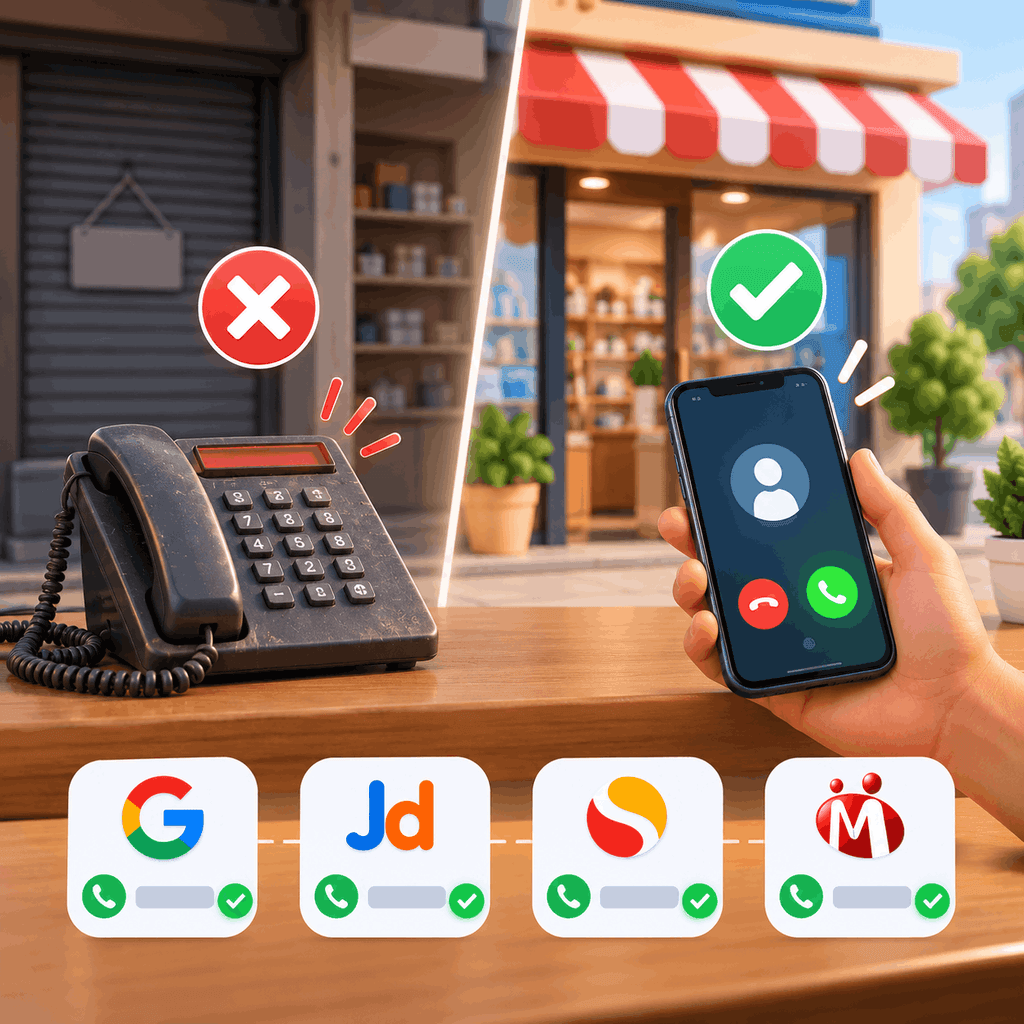
Many shops I audit still show an old landline on Google and on Justdial, while the owner takes every real enquiry on a mobile. The landline rings in an empty shop after hours, or it was disconnected years ago. Google asks for “a local phone number” that is “under the direct control of the business” (Business Profile guidelines). A dead line fails the customer long before it fails any algorithm.
Here’s how I set it up:
- Primary number: the mobile or line someone answers during business hours.
- Landline: if it still works, add it as an additional phone on Google Business Profile. If it’s dead, remove it everywhere.
- Same primary number in your website header, contact page, Justdial, Sulekha and IndiaMART.
- Call-tracking numbers stay off citations. That’s how one shop ends up with four numbers across the web.
Who created the Justdial or IndiaMART listing I never made?
Usually a sales rep. Justdial, Sulekha and IndiaMART sell paid plans through field and phone sales teams. A rep who visited your shop in 2019 may have set up the listing on the spot, with whatever number and email were handy that day.
That rep has probably moved on. The login email may belong to nobody at your business. The listing still shows up when someone searches your category on that platform, and it still shows the old number.
This is the part generic NAP guides skip, and it’s where I’ve seen real enquiries go missing.
What I do:
- Search each platform for your business name and every phone number you’ve ever used.
- Use the platform’s claim or “is this your business?” flow, verified by OTP to a number you control today.
- If the OTP goes to a dead number, contact the platform’s support. Have proof ready: GST certificate, Udyam certificate, or a utility bill at the shop address.
- Correct the listing. Don’t rush to delete it.
Why not delete? An old listing with reviews carries history, and a new one starts from zero. Remove only true duplicates.
In what order should I fix my business listings?

Fix them in order of how many real customers see them, not in the order a citation list gives you.
- Google Business Profile. This is your source of truth. Name exactly as on your signboard, canonical address, primary number.
- Your website. Footer, contact page and LocalBusiness schema should match Google Business Profile.
- The aggregator your customers actually use. For a manufacturer or wholesaler, that’s often IndiaMART. For home services, often Justdial or Sulekha. Check where your enquiries come from before assuming.
- Bing Places and your Facebook page. Smaller audiences, but quick to fix.
- The long tail of directories. My list of local citation sites in India covers which ones are worth your time.
If you need the wider picture first, start with my guide to <!– HOLD: confirm pillar is live before publishing –> local SEO in India.
Is citation cleanup worth paying an agency for?
Often, no.
If you run one shop with a Google profile and two or three aggregator listings, you can do this yourself in an afternoon with the checklist below. Paying someone for “citation cleanup” there means paying for work you could finish before lunch.
Outside help earns its fee when you have several branches, you’ve moved or changed numbers more than once, you’ve rebranded, or orphaned listings need weeks of chasing support. That’s the kind of work I take on inside my local SEO services.
One honest limit: clean NAP won’t lift you past a competitor with far more reviews or a shop closer to the searcher. It removes a drag. It doesn’t create momentum. Consistency is one part of a proper local SEO plan for your business, not the whole plan.
What’s on the NAP consistency checklist?
NAP consistency checklist for Indian businesses — thegirdharisingh.com
| # | Check | What “fixed” looks like | Where |
|---|---|---|---|
| 1 | Name matches your signboard | Exact trading name, no added keywords | Google, website, all listings |
| 2 | One canonical address written down | Shop no., floor, building, street, locality, city, pin | Shared note for staff |
| 3 | Pin code identical everywhere | Same 6-digit pin on every listing | All |
| 4 | Map pin lands on your shop | Locality spelling doesn’t shift the pin | Google, Justdial, Sulekha |
| 5 | One primary phone number | Answered during business hours | All |
| 6 | Landline checked | Working → additional number; dead → removed | Google, Justdial |
| 7 | Old numbers searched | Every past number searched on each platform | Google, aggregators |
| 8 | Orphaned listings claimed | OTP verified to a current number | Justdial, Sulekha, IndiaMART |
| 9 | Duplicates handled | One listing per location per platform | All |
| 10 | Website matches Google | Footer, contact page, schema | Website |
| 11 | Tracking numbers off citations | Only the primary number appears | Aggregators |
| 12 | Change log kept | Date, platform, change, login owner | Spreadsheet |
Want Better Local SEO Results?
Keep your business NAP details consistent and improve local visibility.
Contact us today. No obligation. Contact us today.Frequently asked questions
What is NAP consistency in SEO?
NAP consistency means your business name, address and phone number are the same on every listing that mentions you — Google Business Profile, your website and directories like Justdial, Sulekha and IndiaMART. Google says complete, accurate information makes a business more likely to appear in local results, and matching listings help confirm your details are accurate.
Does my address need to match exactly on every directory?
No. In my experience, small formatting differences such as “Shop 4” versus “Shop No. 04, Ground Floor” don’t cause ranking problems, and Google’s guidelines treat floor and unit numbers as optional detail. What matters is that the pin code, locality and map pin point to the same place. Fix location errors first, formatting last.
Should I use a landline or mobile number on Google Business Profile?
Use whichever number is actually answered during business hours as the primary number. Google asks for a local number under the business’s direct control. If your landline still works, add it as an additional phone. If it’s disconnected, remove it from Google, your website and every aggregator listing so enquiries don’t go unanswered.
How do I claim a Justdial or IndiaMART listing a sales rep created?
Search the platform for your business name and every old phone number. Use its claim flow with an OTP to a number you control now. If the OTP goes to a dead number, contact platform support with proof of business, such as a GST certificate, Udyam certificate or utility bill. Correct the listing rather than deleting it.
How long does NAP cleanup take for a small business?
For one location with a Google profile and a few aggregator listings, the checking and editing usually fits into an afternoon. Reclaiming listings created by sales reps takes longer, because it depends on each platform’s support team. Businesses with several branches, past moves or number changes should plan for a longer project.
Where should I start today?
Take ten minutes. Search your current phone number and every old one, in quotes, on Google and on Justdial. Every listing showing a number you no longer answer is an enquiry going nowhere. Write those listings down. That list is your cleanup plan.
If the list is longer than you expected, or the listings aren’t yours to claim, get in touch with me and I’ll tell you honestly whether it needs outside help.