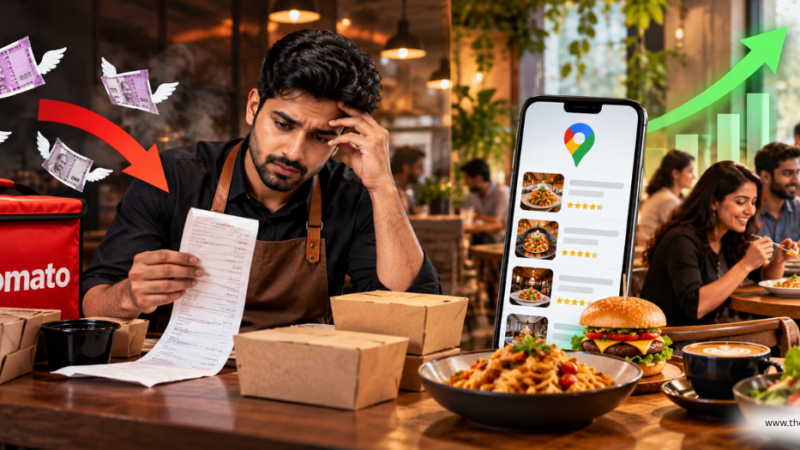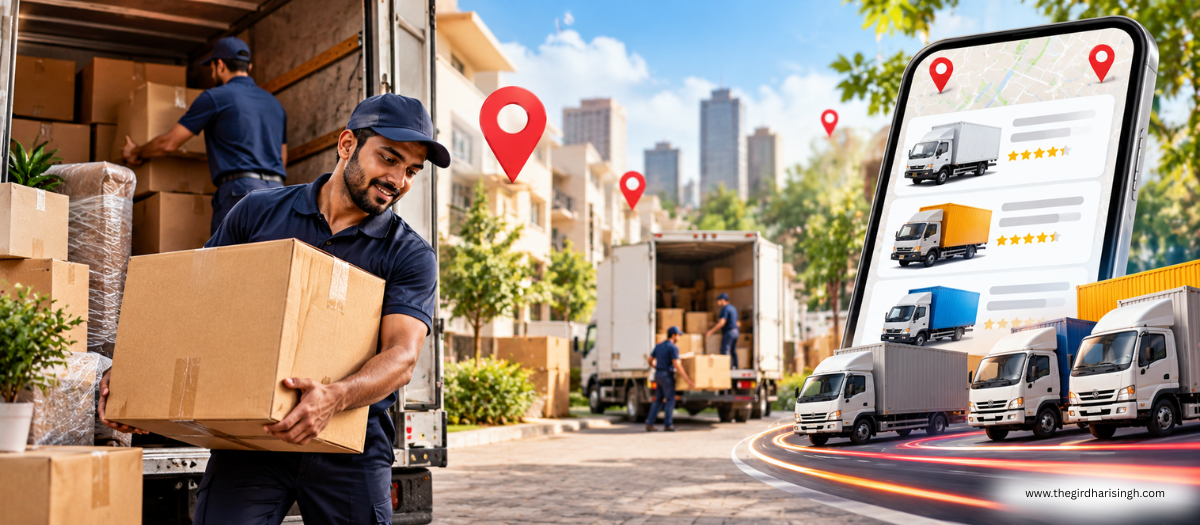
Local SEO for packers and movers works when you stop fighting aggregators for “packers and movers in [city]” and build two things they can’t fake: route pages (“Jaipur to Pune packers”) backed by real move data, and trust signals a customer can verify — a GST number, a staffed address, real reviews. Credibility is the gap in this category.
Why do packers and movers lose local search to aggregators?
Because aggregators are built to win the broad search and you aren’t. A lead portal publishes one page per city, links it across thousands of pages, and ranks for “packers and movers in Jaipur.” Then it sells the enquiry to several movers at once.
In my experience, a mover’s own site with one homepage and a contact form rarely wins that head term.
So here’s the claim plenty of SEOs will argue with: most small movers should stop chasing “packers and movers [city]” altogether. The buyer on that page is comparing ten logos. You’ll spend months becoming logo eleven.
The buyer you want is further down the funnel. They already know where they’re moving from and to. That’s where aggregators are thin.
What are route pages, and why do they beat aggregators?
A route page is one page for one lane you actually run, like “Jaipur to Bangalore packers and movers.” It answers a buyer whose route is already decided.
Aggregator route pages tend to be templates with the city names swapped. A mover who really runs the lane can publish things a template can’t:
- Road distance and the transit time you actually quote (for example, “4–6 days by road”)
- Which vehicle you use for a 1BHK versus a 3BHK on that lane
- The price range you quote, with what’s included and excluded
- Whether you do part-load or full-truck on that route
- Transit insurance terms and who the insurer is
- A real photo from a real move on that lane, with the customer’s permission
One honest photo of your branded truck being loaded beats 800 words of “safe and reliable shifting.”
Here’s the warning, though. Google’s spam policies name doorway abuse, including “having multiple domain names or pages targeted at specific regions or cities that funnel users to one page.” Fifty route pages with swapped city names are exactly that. If you can’t fill a page with facts about the lane, don’t build it.
| Route page that earns rankings | Doorway page that gets ignored or penalised |
|---|---|
| Lane you’ve run in the last 12 months | Every city pair you can think of |
| Transit days, vehicle and price range you actually quote | “Best packers at lowest price” copy |
| Your own photos from that lane | Stock images of boxes |
| Reviews that mention the route | No route-specific proof |
| Linked from a clear “Routes we run” hub | Orphan pages that only exist for search |
If you also serve neighbourhoods within one city, the same rule applies. My guide to locality pages covers when a locality earns its own page and when it doesn’t.
- Explore Now:-Local SEO for Clinics in India
How many route pages should a packers and movers business build?
Fewer than you think. In my experience, start with the five to ten lanes that make up most of your actual jobs. Pull them from your last year of invoices, not from a keyword tool.
Add a new route only when you have something specific to say about it: a real transit time, a real price range, a real job. A smaller set of pages with real detail is a better bet than a large set of thin ones.
Build lanes where you’re the origin city first. Your godown, phone number and reviews are there, so your trust signals are strongest.
Which trust signals separate a real mover from a fake listing?
Signals a customer can check. Unverifiable claims are worth almost nothing here, because everyone makes them.
- GST number on every page footer and quote. A customer can look it up on the GST portal’s taxpayer search and see your legal name. Fake listings rarely want that check.
- A real, staffed address with signage. Photos of your godown and office board on your site and Business Profile.
- Branded vehicles. Your company name on the truck, visible in your photos.
- A written quote format. Itemised: packing material, labour, transport, insurance, GST. Publish a sample.
- Transit insurance named plainly. Which cover, what it pays, how a claim is filed.
- Reviews that name routes and crew. “Jaipur to Pune, Ramesh’s team, two days late but nothing broken” is believable. Ten five-star reviews saying “very good service” aren’t.
Be careful with certificate and “approved” badges you can’t show proof for. If a buyer can’t verify it, it reads like everyone else’s claims.
These same details need to match everywhere you’re listed. My list of local citation sites in India shows where to put them and keep them consistent.
Why are fake-address listings so risky for packers and movers?
Because Google’s rules here are explicit. if you run a Business Profile at an address where you don’t operate, you’re risking suspension of the profile.
The Google Business Profile guidelines state that a rented mailing address “also known as a virtual office” isn’t eligible, that service-area businesses “can’t list a ‘virtual’ office unless that office is staffed during business hours,” and that violations “could result in the suspension of your Business Profile.” The same page says not to create more than one profile per location, and not to add unnecessary information to your business name.
In practice, I see three patterns that get movers in trouble:
- One real godown, plus five “branches” at friends’ shops or co-working desks
- Business names like “Sharma Packers and Movers Best Shifting Jaipur”
- A shown address where there’s no permanent signage
If customers don’t visit your location, run as a service-area business and hide the address. A live profile ranking for fewer areas beats a suspended one ranking for none.
My local SEO service starts with this clean-up before anything else, because there’s no point building on a profile that can disappear.
How should packers and movers collect reviews without breaking the rules?
Ask every customer after delivery, and ask the same way every time. Google’s prohibited content policy bars reviews “that have been paid for, directly or in kind,” and says businesses may not “selectively solicit positive reviews from customers.” So no discount for a review, and no only-asking-the-happy-ones.
India’s Department of Consumer Affairs also launched a framework on this. The PIB release of 21 November 2022 introduced BIS standard IS 19000:2022 for how online reviews are collected, moderated and published. It was voluntary at launch, so check its current status before quoting it to a client.
What I tell movers: send the review link on WhatsApp the evening after unloading, and ask the customer to mention the route.
Should packers and movers keep paying for aggregator leads?
Honestly, for a while, yes. Local SEO takes months to show results, and you still need jobs this month. Cut aggregator spend gradually as your own enquiries grow, not on day one.
Local SEO isn’t the right buy for everyone either. I’d tell you not to spend on it if:
- You don’t have a fixed, staffed location and don’t want to run as a service-area business
- Nobody reliably answers the phone between 9 and 7
- You can’t take photos or collect reviews from your own jobs
If those are in place, the route-page approach is where local SEO for packers and movers pays back. For the wider framework across categories, see my guide to local SEO in India.
Frequently asked questions
What is local SEO for packers and movers?
Local SEO for packers and movers is the work of getting a moving business found in Google Maps, local search and AI answers for the routes and areas it serves. It covers the Google Business Profile, route pages on the website, consistent listings across directories, and genuine customer reviews. The goal is direct enquiries instead of shared aggregator leads.
Can a small mover outrank lead aggregators on Google?
On broad terms like “packers and movers in Jaipur,” it’s usually hard, because aggregators have far more pages and links. On specific route searches such as “Jaipur to Pune packers,” a mover who really runs the lane can compete, because they can publish real transit times, prices, photos and reviews that template pages don’t have.
Are city-to-city route pages against Google’s rules?
Not by themselves. Google’s spam policies target doorway pages: many near-identical pages built only to rank for city names. A route page is fine when it contains real information about that lane — transit time, vehicles, price range, insurance and proof of past moves. If you can’t write those facts for a route, don’t publish the page.
Can I list my packers and movers business at a virtual office?
No. Google Business Profile guidelines say a virtual office isn’t eligible, and service-area businesses can’t list one unless it’s staffed during business hours. Breaking this rule can lead to suspension. If customers don’t visit your location, register as a service-area business and hide your address rather than inventing a storefront.
How long does local SEO take for a moving company?
In my experience it’s months, not weeks, and it varies by city competition and how clean your existing listings are. Fixing your Business Profile and duplicate listings can help sooner. Route pages and reviews build up more slowly. Keep some paid lead sources running while organic enquiries grow, then reduce them step by step.
Where to start
Take ten minutes today. Open an incognito window and search your busiest lane — for example, “Jaipur to Delhi packers and movers.” Note who appears: aggregators, competitors, or you. Then search your own business name in Google Maps and check for duplicate or fake listings using your name.
That one search tells you whether you have a route-page gap, a listing problem, or both. If you’d like a second pair of eyes on what you find, get in touch here.