Google says local results depend mainly on relevance, distance and prominence. Distance you can’t change. In India, the fastest map pack gains for a small business come from relevance — primary category, name, services, hours — which costs nothing and takes an afternoon. Prominence, built from reviews and links, takes most of a year.
I’ve done local SEO for over ten years, for businesses across India that live or die on the three map listings. The usual pattern: the owner pays monthly for the slow factor while the free one sits broken.
What does Google actually say decides map pack rankings?
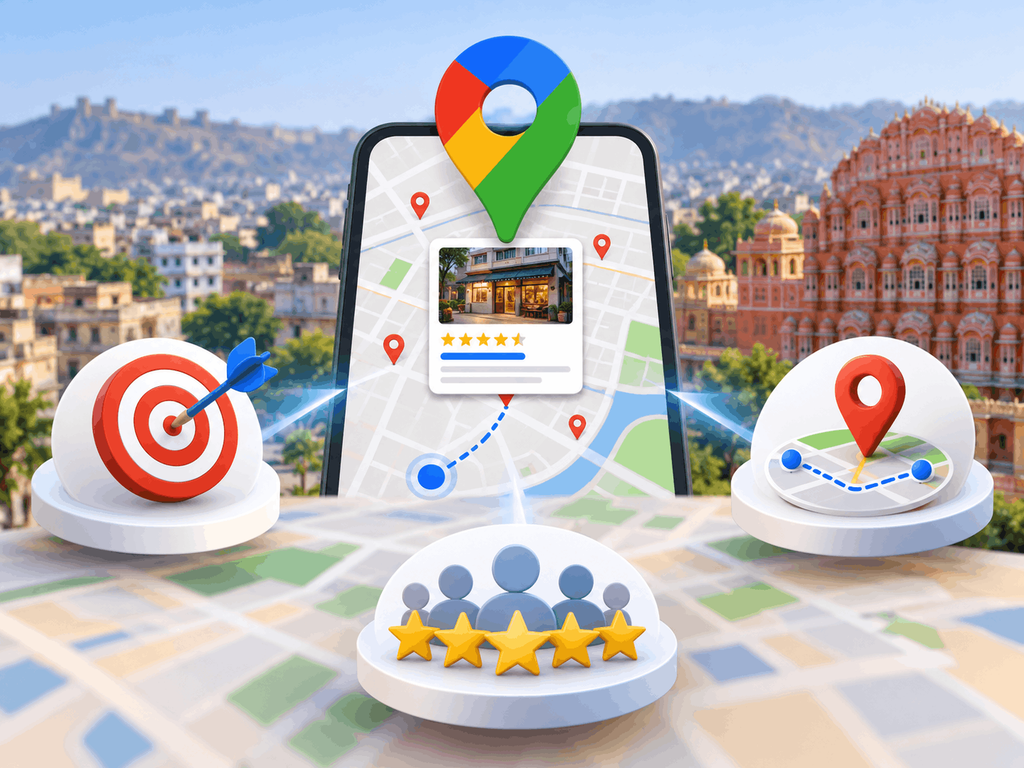
Google Business Profile Help says local results are based mainly on relevance, distance and prominence. Relevance is how well your profile matches the search. Distance is how far you are from the person searching. Prominence is how well known you are, which Google says is based on info like how many websites link to your business and how many reviews you have.
The same page says: “There’s no way to request or pay for a better local ranking on Google.”
Everything else you’ve read — weekly posts, geotagged photos, 200 citations — is somebody’s theory about how those three get calculated. None of it is a fourth factor.
So the useful question isn’t what the Google Maps ranking factors are. It’s which of the three you can move, how fast, and at what cost.
Which map pack ranking factors can you fix this month?
| What to fix | Which factor | Time to do it | Cost | Time to see movement |
|---|---|---|---|---|
| Primary category | Relevance | 10 minutes | ₹0 | Days to weeks |
| Secondary categories | Relevance | 20 minutes | ₹0 | Weeks |
| Business name matches your signboard | Compliance | 10 minutes | ₹0 | Removes suspension risk |
| Services and description filled in | Relevance | 1–2 hours | ₹0 | Weeks |
| Hours, including festival hours | Relevance | 30 minutes | ₹0 | Immediate |
| Real photos of the actual premises | Conversion (not a named factor) | 1 hour | ₹0 | Weeks |
| Website page that matches the category | Relevance | A few days | Low | 4–8 weeks |
| Steady review flow | Prominence | Ongoing | ₹0 | 3–6 months |
| Local press, links, mentions | Prominence | Ongoing | High | 6–12 months |
| Proximity to the searcher | Distance | Not changeable | — | Never |
The primary category is the highest-leverage field on the profile. Most Indian businesses get it wrong the same way: they pick a category for what they sell, not what they are. Google’s guidelines give a sentence test: choose categories that complete “this business IS a”, not “this business HAS a”. A multi-speciality clinic with one physiotherapy room is not a physiotherapy centre.
While you’re in there, check the business name. The same guidelines don’t permit extra service, location or marketing information in it; “Verizon Wireless 4G LTE” and “Holiday Inn (I-93 at Exit 2)” are their own examples. A lot of profiles I open in India read like “Sharma Dental Clinic Best Dentist in Malviya Nagar”. That’s a suspension waiting for a competitor to report it.
For the full field-by-field pass, my Google Business Profile optimisation checklist covers it.
Why is proximity the factor nobody tries to sell you?
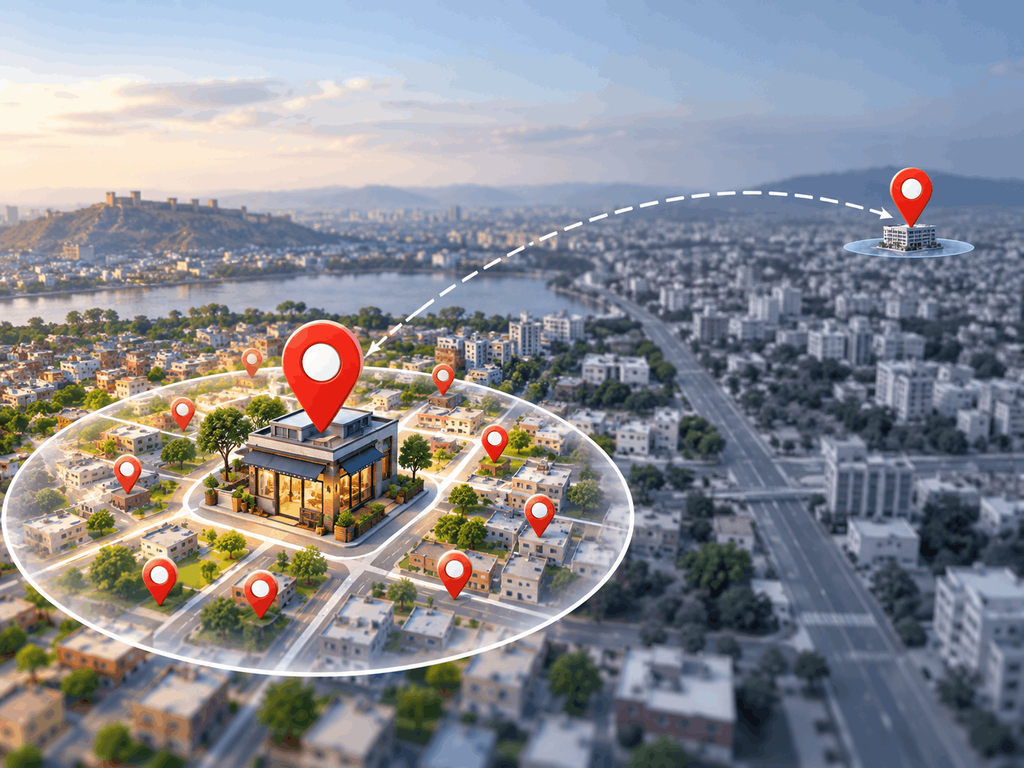
Distance is how far you are from the searcher, and Google says that if a customer doesn’t share where they are, it uses what it knows about their location. In my experience, it’s the factor that most limits who sees you. That’s why you and a customer at opposite ends of one city see different top-three results for the same words.
It’s also why “we rank number one in Google Maps” has a missing variable: number one from where?
Proximity is free, fixed and the biggest constraint on your ceiling. You don’t buy it. You either have it or you don’t.
So for some businesses, the map pack is the wrong channel. If you’re eight kilometres from the market your customers search in, no amount of local SEO puts you in a pack drawn around that market. Locality pages, organic rankings and paid search will return more.
I’d rather tell a business that in month one than take twelve months of fees to discover it together.
Don’t fix it with an address you don’t operate from. Google’s guidelines require a precise, accurate address, and a co-working office only qualifies with clear signage, customers received and staff present during business hours. A service area “shouldn’t extend farther than about 2 hours of driving time”.
Which ranking factors take a year, and should you pay for them now?
Prominence, and mostly no — not in the first six months.
Here’s the claim I’ll defend, and plenty of agencies will argue with it: for a single-location Indian business, bulk citation building is the worst-value line item in a local SEO budget. My reason is a measurement problem. Citation packages usually start in the same month as category and service fixes. When visibility improves, fifty directories get the credit for the category’s work, and nobody can separate the two.
What I do think matters within prominence:
- Reviews, steadily. Google says more reviews and positive ratings can help your local ranking. It’s slow, and it compounds.
- The few Indian listings your customers already use. Justdial, IndiaMART, Practo or Sulekha, depending on your category, kept accurate. A handful, not fifty auto-submitted ones.
- Real local mentions. A news piece, an association listing, a sponsorship. Hard to get, and worth more than the fifty.
Not worth paying for early: directory volume, geotagged photo services, or anyone selling reviews. Google’s Maps content policy bans paid reviews and selectively asking happy customers. For the process instead of the shortcut, see my review management approach for professional services.
The trade-off: prominence done properly is slow and gives you nothing to screenshot in month two. If you need enquiries in eight weeks, spend elsewhere.
What order should you fix map pack ranking factors in?
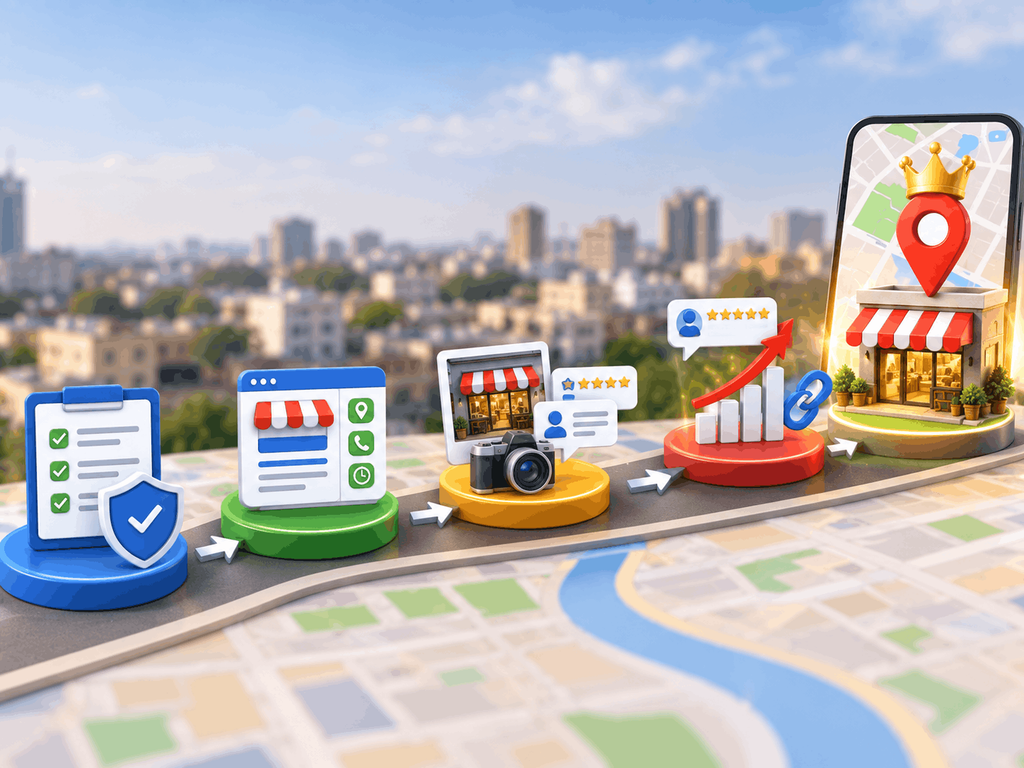
This is how I sequence a local SEO engagement. The fast fixes change what the slow ones are worth.
- Compliance first. Name, address, category accuracy. Anything that risks suspension gets fixed before anything that adds visibility. A suspended profile ranks nowhere.
- Relevance second. Primary and secondary categories, services, description, hours, and the website page the profile points to. This is month-one work, and it’s free.
- Conversion third. Photos of the real place and replies to reviews, so the people who find you pick you.
- Prominence last, and forever. Reviews and real mentions, started in month one, judged in month six.
The mistake I see most often is running steps 2 and 4 together so the first monthly report looks busy. I hold prominence spend until relevance is clean, because until then you can’t tell which lever moved anything.
When is map pack optimisation not worth paying for?
You have no verifiable physical presence. No address, no staffed location, no service area you can legitimately claim. Google Business Profile isn’t your channel, and forcing it risks a suspension.
Your customers don’t use Maps. Most B2B SaaS, most consultants, most national sellers. The map pack serves people who want to visit or call someone nearby. If nobody searches “near me” for what you do, optimise elsewhere.
You’re measuring by rank position. Map pack rank changes with the searcher’s location, so one number isn’t a result. Judge it by calls, direction requests, WhatsApp enquiries and bookings.
And the limit on all of it: none of this fixes a business people don’t like. Relevance gets you shown. Reviews get you chosen, and those are earned offline.
Want to Rank Higher in Google Maps?
Boost your local visibility and attract more nearby customers with a strong Local SEO strategy.
Get in touch today. No obligation. Contact us today.What else do owners ask about ranking in the map pack?
What are the main Google map pack ranking factors?
Google Business Profile Help names three: relevance, distance and prominence. Relevance is how well your profile matches the search, distance is how far you are from the searcher, and prominence is how well known your business is, based partly on links and review count. Google also says nobody can pay for a better local ranking.
Can I improve my local pack ranking without spending money?
Yes, and it’s usually where the biggest early gains are. Primary and secondary categories, services, description, accurate hours, real photos and a matching website page all cost nothing but time. Most of these affect relevance, the factor many small businesses leave broken while paying for slower ones.
How long does it take to rank in Google Maps in India?
In my experience, category and profile fixes can show movement within weeks. Review-driven prominence builds over three to six months, and link-driven prominence over six to twelve. It depends on how competitive your category and locality are. A promise of map pack results in thirty days usually means searches for your own business name.
Does proximity mean I can’t rank if I’m far from the city centre?
It means you have a ceiling for searches made from areas far from you. You can still do well in the pack near your own location. If your customers cluster somewhere you aren’t, the map pack is a weak channel for you, and locality pages, organic search or paid ads will usually return more.
Do citations and directory listings still help local pack ranking?
Keep the few listings real customers in your category use, such as Justdial, IndiaMART or Practo, accurate. In my experience, bulk directory packages are poor value for a single-location Indian business, especially before categories and services are fixed. Accuracy across a handful of listings beats volume across fifty.
Where should you start?
Open your Google Business Profile and read your primary category out loud with “this business is a” in front of it. If the sentence is false, or describes something you sell rather than what you are, you’ve found the most valuable ten minutes in your local search work. It costs nothing.
If you’d like a second pair of eyes on which factor is actually capping you before you commit to a retainer, get in touch.