AEO, or Answer Engine Optimization, is the practice of structuring your content so AI-powered answer engines — Google’s AI Overviews and AI Mode, ChatGPT, Perplexity, Gemini, Copilot — pull your business in as a cited source when they answer a buyer’s question. It sits on top of SEO rather than replacing it: crawling, indexing and authority signals stay exactly the same, but the goal shifts from ranking a page to getting quoted inside an answer. In practical terms, AEO is SEO adapted for a results page that increasingly has no results on it — just an answer.
Is AEO just SEO with a new name?
About two-thirds of it is SEO you should already be doing. One-third is genuinely new — and the new third usually isn’t the part vendors sell you.
The overlap is large. Crawlability, site speed, internal linking, topical depth, author credibility, backlinks. A site that can’t rank won’t get cited.
What’s actually new is the unit of optimization. SEO optimizes a page. AEO optimizes a passage. An answer engine doesn’t lift your 2,000-word article; it lifts forty words from paragraph three. A page sitting at position four with a crisp, self-contained definition often gets quoted over the number-one page that buries its answer under 300 words of context-setting.
The other new thing: citation and clicks come apart. You can be named in an answer, shape the decision, and receive zero visits. Traffic stops being the scoreboard — a bigger adjustment than any tactic below.
AEO vs SEO vs GEO — what’s the actual difference?
Vendors use these terms loosely, so here’s the clean version:
- SEO — earn a ranked position. Success looks like rankings and clicks.
- AEO — become the answer itself, across featured snippets, People Also Ask, voice results and AI Overviews. Success looks like being the extracted answer.
- GEO (Generative Engine Optimization) — a narrower term for showing up inside generative outputs specifically: ChatGPT, Perplexity, Gemini, AI Mode. Success looks like citations inside a generated response.
In execution, AEO and GEO have collapsed into one workflow. If an agency prices them as two line items, ask what the second one adds.
Why this lands earlier on Indian businesses than most markets
India was not a late market for AI search. AI Overviews arrived here in 2024, and when Google took AI Mode outside the United States in June 2025, India was the first country it went to. Google’s India announcement said AI Overviews were already driving a 10%-plus lift in usage for the query types where they appear. Third-party measurement agrees: an analysis of roughly 108 million queries in Semrush’s Brand Radar dataset put AI Overview coverage in India near 27% of keywords, against around 20% in the US.
So if you sell B2B SaaS or consulting to Indian buyers, a real slice of your top-of-funnel research questions is already being answered before anyone reaches your site.
A starter AEO checklist, in the order that matters
- Front-load the answer. The first two or three sentences of every page should fully answer the question in your H1, standalone. If a paragraph only makes sense given the one before it, it can’t be lifted.
- Write headings as questions. Use the phrasing a buyer would type or say aloud. Clever headlines are invisible to answer engines.
- Make each section self-sufficient. One question, one complete 40–80 word answer, then expand underneath.
- Add structured data where it’s honest. Article, FAQPage, Organization, Product. Schema helps machines parse your page; it doesn’t manufacture authority.
- Publish specifics only you have. Pricing bands, implementation timelines, integration lists, what a project actually costs in India. An engine that can generate the generic version has no reason to name you.
- Put a named human on it. Real author, credentials, dated updates, verifiable claims.
- Get named on pages you don’t own. The big one — see below.
The part nobody selling you an “AEO package” mentions
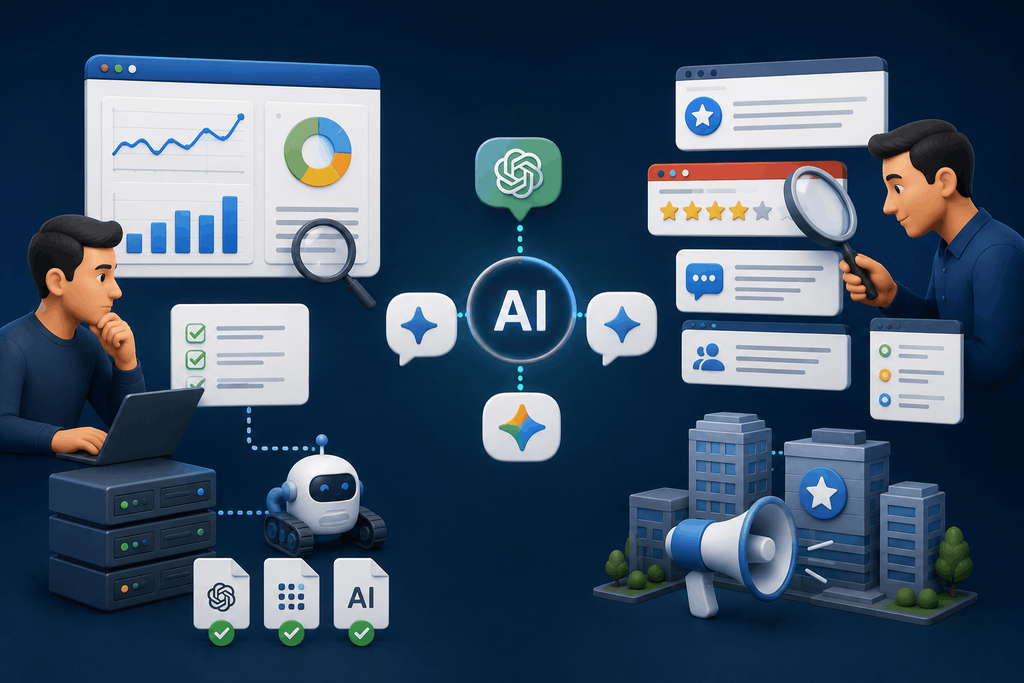
First, you can’t measure it cleanly. Search Console folds AI Mode data in with ordinary Search, so there’s no way to isolate it, and no reliable citation-share metric exists yet. What works is unglamorous: keep a fixed list of 30–40 buyer questions, run them monthly through ChatGPT, Perplexity, Gemini and AI Mode, and log whether you were named and whether the description was accurate. Then check server logs for GPTBot, PerplexityBot and ClaudeBot to confirm you’re being crawled at all. Anyone showing you a confident AEO dashboard is showing you inference dressed as data.
Second, for high-consideration purchases, most of your leverage sits off your own website. Ask an AI engine “best HRMS for a 200-person company in India” and the answer gets assembled from comparison articles, review platforms and forum threads. Vendor homepages rarely feature, because every one of them claims to be the best and the model discounts that. If nobody else has named you in that comparison, you can rewrite your homepage fifty times and stay invisible.
For B2B SaaS and consulting firms here, AEO looks far more like digital PR and review-platform work than on-page SEO. That’s the slide most agency decks quietly skip.
What goes wrong when businesses “do AEO”
- Bolting a twelve-question FAQ block onto every page. It dilutes the topic and reads like it was written for machines — because it was.
- Chopping long-form content into short Q&A. Teams shorten pages to make them “extractable” and destroy the depth that ranked them. Short answer first, depth underneath.
- Getting cited with stale information. Old pricing, a discontinued service, positioning from three years ago. Nobody catches it because nobody owns it.
- Treating it as a one-time project. It’s a quarterly habit, closer to reputation management than a site migration.
Do you need to act on AEO right now?
Depends on who buys from you:
- Act now if your buyers research inside ChatGPT or Perplexity before they ever open Google — B2B SaaS, IT services, consulting, anything sold to tech-literate decision-makers.
- Act soon if you’re an expert-led firm with high-ticket buyers who read for weeks before enquiring.
- Fix fundamentals first if you’re a local business winning on Maps and phone calls. AEO on a site that can’t be crawled properly is decorating.
For most people hearing the term for the first time: you don’t need a separate AEO budget. You need your existing content work to change shape.
Get Found in AI Search
Make your content easier for answer engines to find and understand.
Boost Your AEO Strategy No obligation. Straight talk only.Frequently Asked Questions
Is AEO replacing SEO?
No. AEO runs on top of SEO. Answer engines pull from indexed pages, so crawlability, authority and backlinks still decide whether you’re eligible to be cited at all. AEO changes what you optimize inside a page, not whether you need SEO.
What is the difference between AEO and GEO?
AEO covers every answer surface, including featured snippets, People Also Ask and voice. GEO, or Generative Engine Optimization, is the narrower term for citations inside generative outputs like ChatGPT and Perplexity. Both require the same work and should be run as one workflow.
How do I check whether AI engines are citing my business?
Test manually. Run your top buyer questions through ChatGPT, Perplexity, Gemini and AI Mode each month, and record whether you’re named and whether the details are correct. Then check server logs for AI crawler user agents to confirm your pages are being fetched. No analytics tool reports this reliably yet.
Does schema markup guarantee an AI citation?
No. Schema makes content easier for machines to parse, which helps, but it doesn’t create authority. Thin pages with perfect markup still don’t get cited.
How long does AEO take to show results?
On pages that already have authority, restructured answers can get picked up within one to three months. On a new site with no topical authority, expect the same timeline as building SEO from scratch.